


Smart Modular Homes, Manufactured to Millimetres.
Innova Living builds modular homes as finished, automated units at our Abu Dhabi facility, then delivers and installs them on prepared foundations across the Gulf. Structure, finishes, wiring and smart systems are complete before the module leaves the production line, which is how a permanent, fully specified home is delivered in 4-8 weeks instead of 12-24 months.
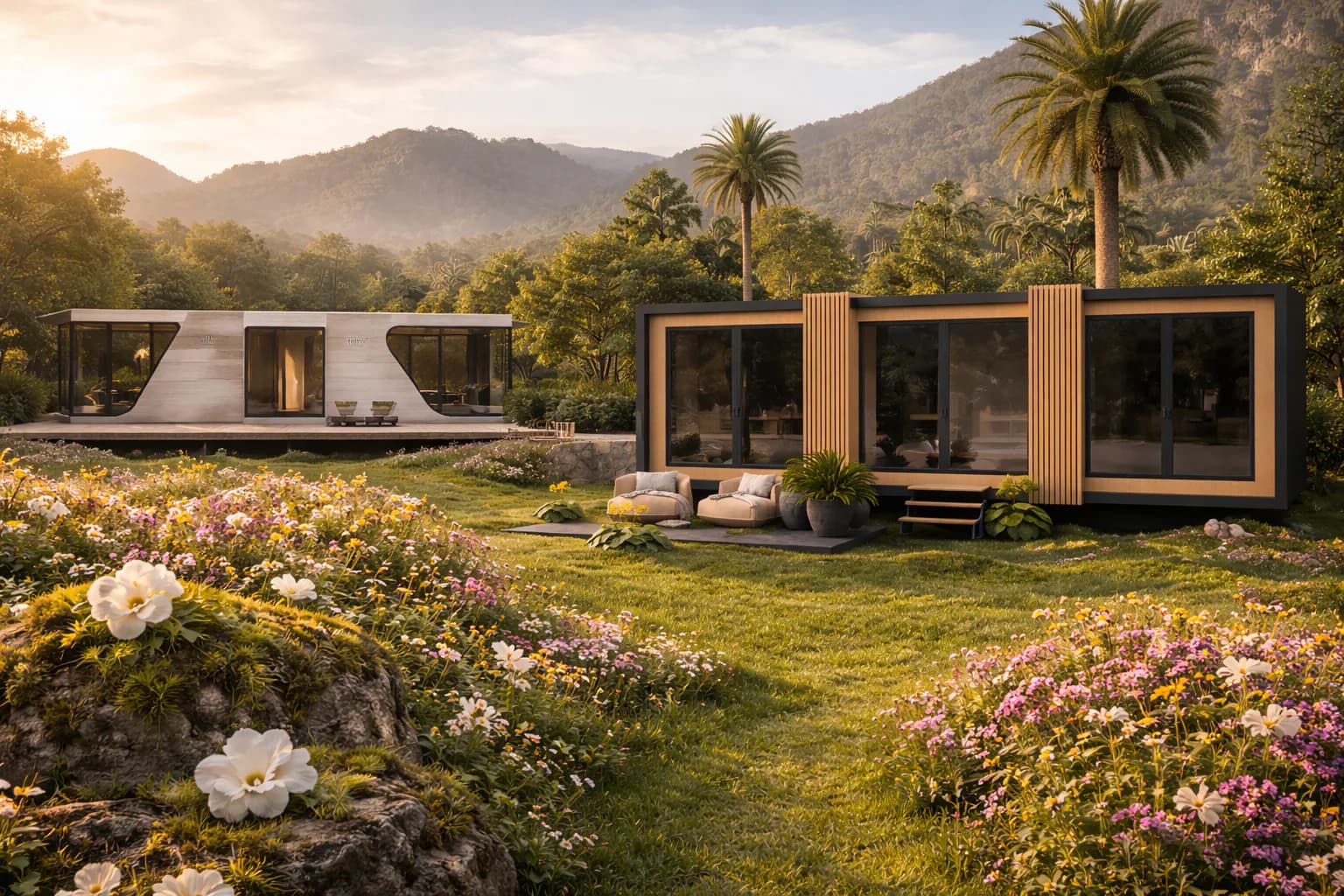
A building system, not a monolith.
A conventional villa in the Gulf takes 12-24 months and stops every time the weather, a trade or a delivery slips. Modular construction removes that dependency chain entirely.
Your foundations and services are prepared while the home itself is manufactured indoors in Abu Dhabi, and the two streams converge on installation day. From design approval to a commissioned, habitable home is typically 4-8 weeks.
Because the building is a system rather than a monolith, it can grow with you. Add a bedroom, expand the living area, or connect several modules into a larger footprint later. The structures are engineered for disassembly and reassembly, so a home can even be relocated to a different site.
Weeks instead of years
A conventional villa in the Gulf takes 12-24 months and stops every time the weather, a trade or a delivery slips. Modular construction removes the dependency chain. Your foundations and services are prepared while the home itself is being manufactured indoors in Abu Dhabi, and the two streams converge on installation day. From design approval to a commissioned, habitable home is typically 4-8 weeks.
Millimetre tolerances, not centimetres
Every home is designed in advanced CAD and manufactured with CNC precision in a controlled environment. That is what allows tolerances measured in millimetres and perfect alignment of walls, floors, ceilings and every smart system integration. Each module passes quality inspection at every production stage, from raw material intake to finished unit.
A home that can grow or move
Modular means the building is a system rather than a monolith. Add a bedroom, expand the living area, or connect several modules into a larger footprint later without a second construction programme. Because the structures are engineered for disassembly and reassembly, a home can also be relocated to a different site entirely, which is simply not possible with traditional construction.
Up to 90% less construction waste
Building indoors changes the waste arithmetic. Precision cutting optimises how much material each component consumes, offcuts are repurposed into smaller elements, and what remains is recycled or upcycled. Combined with eco-certified sourcing and low-VOC finishes, it makes modular the lower-impact route to a permanent home.
Frequently Asked Questions
What modular construction actually means in practice
What is a smart modular home?
It is a house manufactured as finished modules in a factory, with its smart systems already installed, then transported and craned onto prepared foundations on your site. The structure, finishes, wiring, automation and networking are complete before it leaves the production line, so the on-site programme is reduced to foundations, connections and commissioning.
How is modular different from a normal prefab building?
The difference is finish and permanence. Basic prefab implies a temporary or utilitarian unit. Our modules are designed in CAD, cut with CNC precision to tolerances measured in millimetres, and delivered with the automation, insulation and finishes of a permanent home, backed by a 10-year structural warranty.
How long does a modular home take to build?
Typically 4-8 weeks from design approval to a commissioned home, against 12-24 months for conventional construction. The saving comes from running two things in parallel: your site is prepared while the modules are manufactured indoors, and factory work is never stopped by weather.
Can a modular home be extended later?
Yes. That is the core advantage of modular design. Additional bedrooms, an expanded living area or entirely new modules can be connected later using the same precision engineering as the original build, and because the structures are designed for disassembly and reassembly, a home can also be relocated to a new site.
Is the quality as good as traditional construction?
In measurable terms it is more consistent. Factory conditions eliminate weather damage and rushed site work, every module passes inspections at each production stage, and CNC manufacturing means walls, floors, ceilings and system integrations align precisely. The practical result is no creaky floors, no misaligned doors and no gaps or drafts.
How much waste does modular construction produce?
Factory manufacturing generates up to 90% less waste than traditional site construction. Precision cutting optimises material usage, offcuts are repurposed into smaller components, and excess material is recycled or upcycled rather than skipped.
Get a modular home costed for your site
Tell us the plot, the layout you have in mind and how you want to use the space. We will come back within 24 hours with a specification, a delivery window and a price.